Meet this year’s crew of sound residency artists:
Meet this year’s crew of sound residency artists:
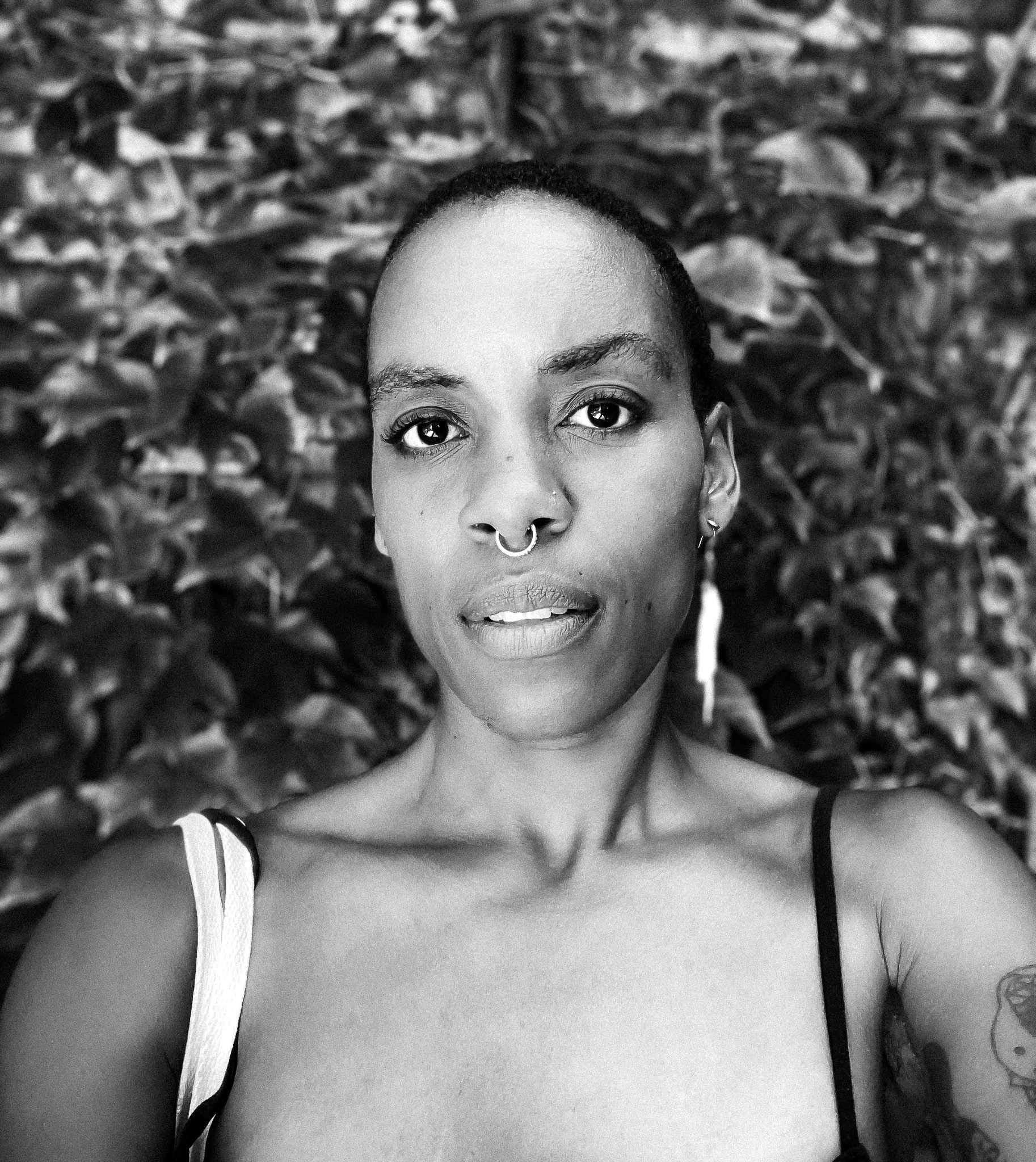
golden lionheart collier golden lionheart collier (he/they) is an award-winning transdisciplinary artistic researcher and archival alchemist whose polymathic practice flourishes in the generative nexus where disciplines, communities, and epistemologies converge. For example, their synergistic work has recently spanned a performance of Gorecki’s Symphony of Sorrowful Songs, film/sonic collaborations in the Arctic Circle, hosting a weekly radio show, and receiving a CODEX International Book Arts Biennial Research Fellowship. A MacDowell fellow, current Audium Theatre Spatial Sound Artist in Residence, and contributor to the Kirkus-starred Black Punk Now, collier was also a Fulbright Research Grant Nominee and finalist for the XENO PRIZE for Artists’ Books. Through engaging, accessible research dissemination, they forge portals to encounter marginalized histories as living testimonies of resistance, weaving generative connections towards more just futures.
Click here to learn more about golden’s innovative practice and research.
How do you map something invisible?
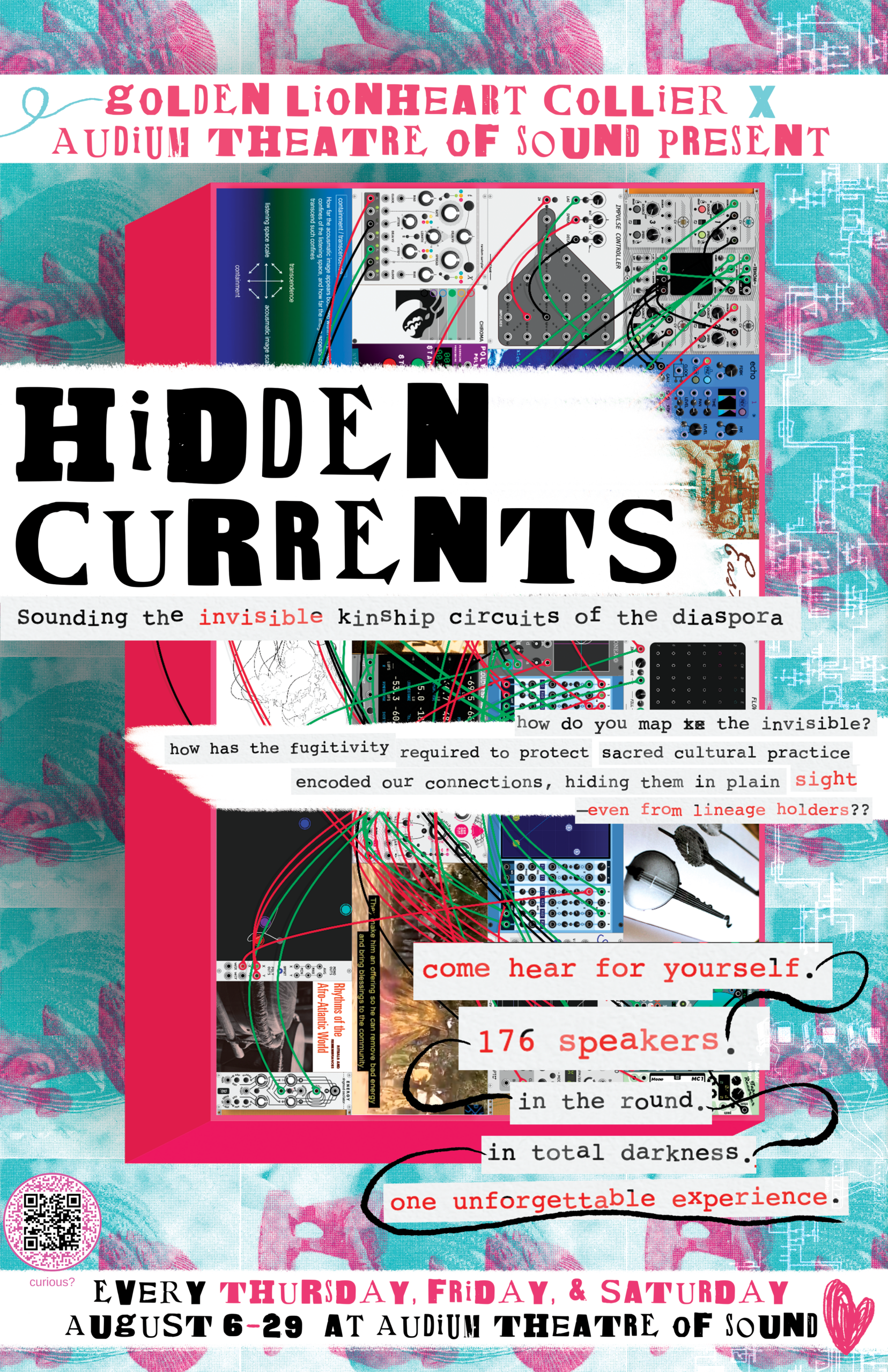
Hidden Currents draws from golden lionheart collier’s original body of research, The Mother Patch. This work is a reimagining of the routes of forced migration across the African diaspora- known as the Maafa, or great disaster. For centuries, European and Asian empires trafficked African lives, forcing millions across the Atlantic and beyond.
Working with community partners and archival collaborators, collier activates hundreds of field recordings, interviews, and archival audio, weaving together Candomblé devotees, New Orleans Second Line processions, Bomba dancers, ring shouts, field hollers, water drumming, family interviews, and elders speaking of Hoodoo.
During their live performance, golden, a classically trained violist, will weave live string works in conjunction with recordings broken into tiny fragments and reassembled unpredictably. The work is set in motion through a custom-built modular synth system that sonifies the hidden networks of connection that have run through the African diaspora for centuries. Working with community partners and archival collaborators, golden activates hundreds of field recordings, interviews, and archival audio – a compositional approach that mirrors the ever-dynamic, omnidirectional logics of Black diasporic culture itself.
Barbara Nerness is an artist and scientist whose work spans music composition, live performance, video, and cognitive science. She currently teaches in Technology and Applied Composition at the San Francisco Conservatory of Music. She received her PhD and Doctoral Certificate in Composition from Stanford’s Center for Computer Research in Music and Acoustics (CCRMA). She has performed at venues throughout the Bay Area and Los Angeles, as well as the Brooklyn Academy of Music, ZKM, and the Sonic Arts Research Centre.
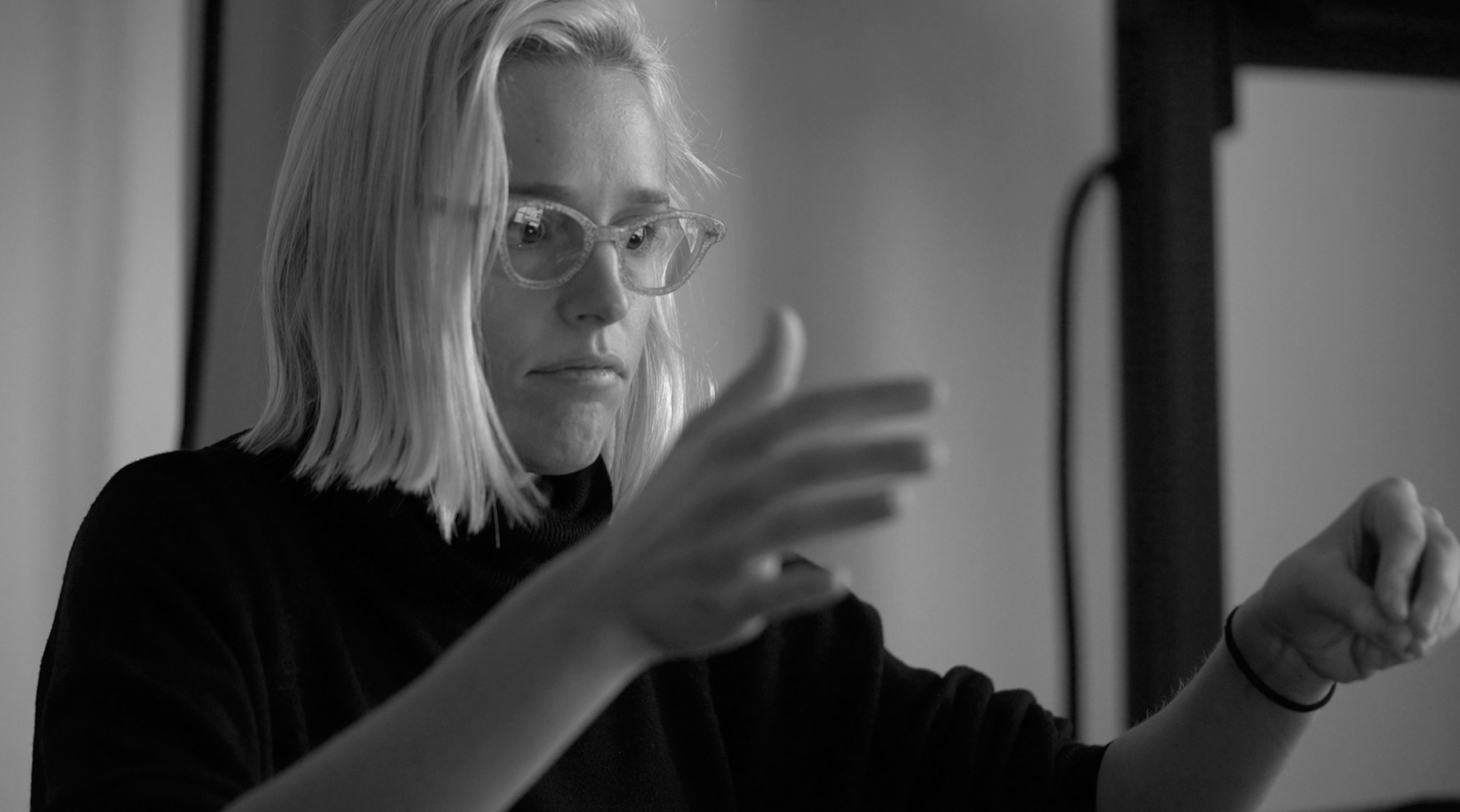
Barbara Nerness is an artist and scientist whose work spans music composition, live performance, video, and cognitive science. She currently teaches in Technology and Applied Composition at the San Francisco Conservatory of Music. She received her PhD and Doctoral Certificate in Composition from Stanford’s Center for Computer Research in Music and Acoustics (CCRMA). She has performed at venues throughout the Bay Area and Los Angeles, as well as the Brooklyn Academy of Music, ZKM, and the Sonic Arts Research Centre.
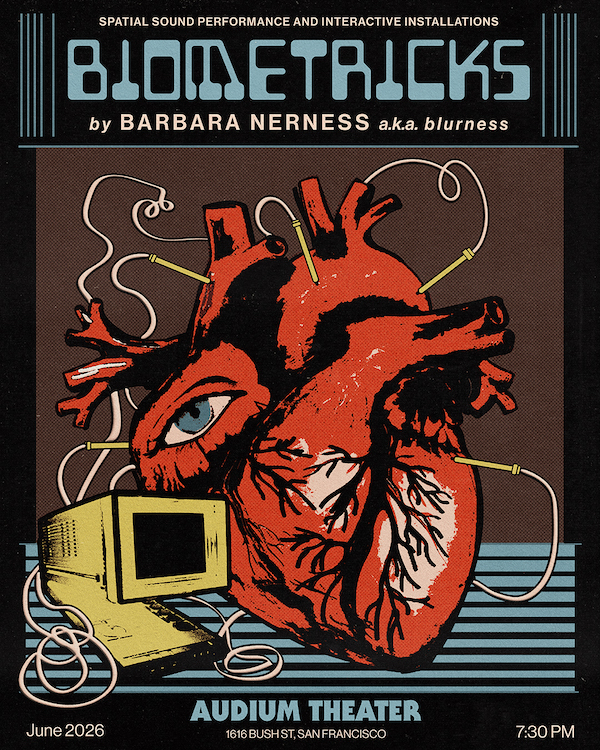
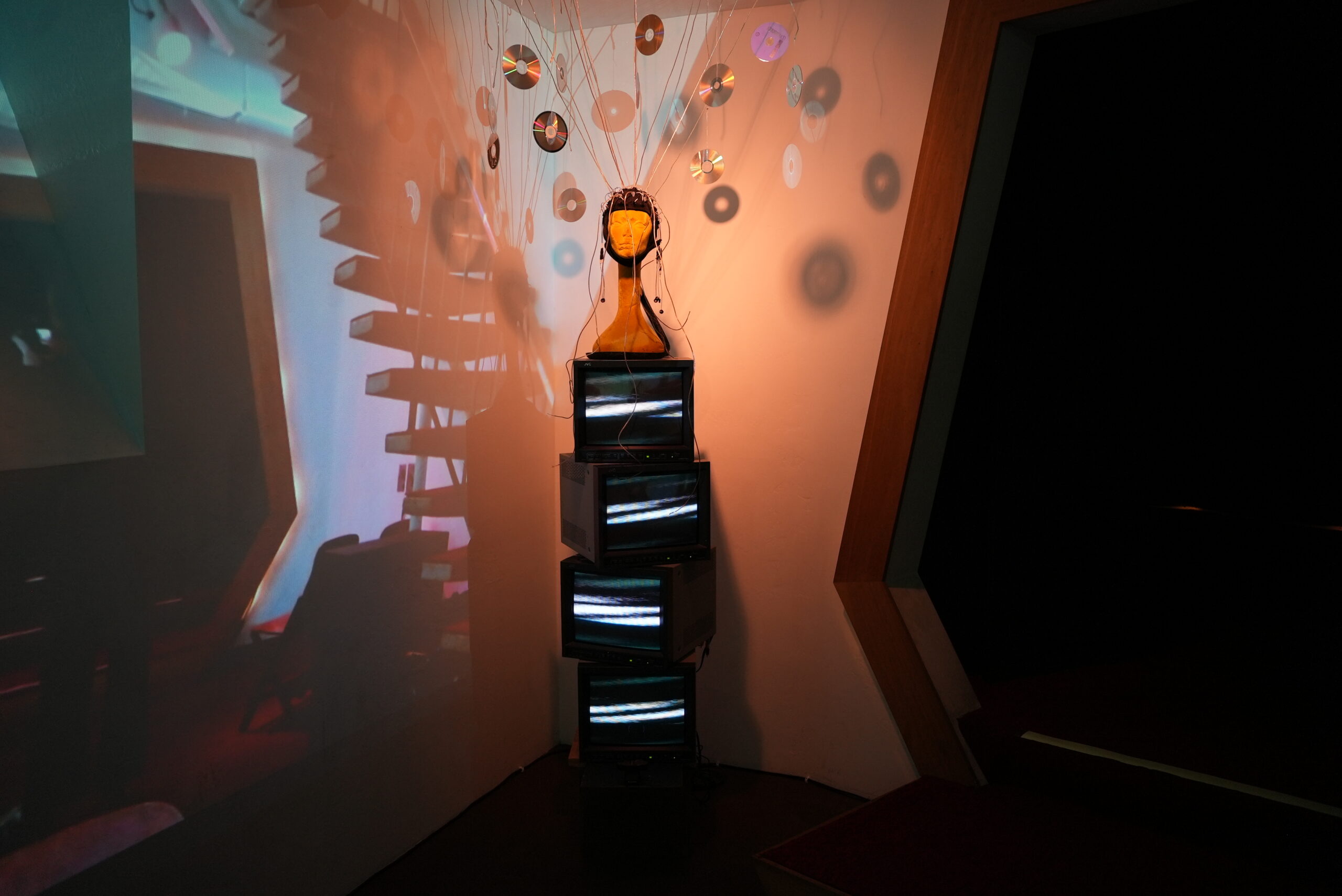
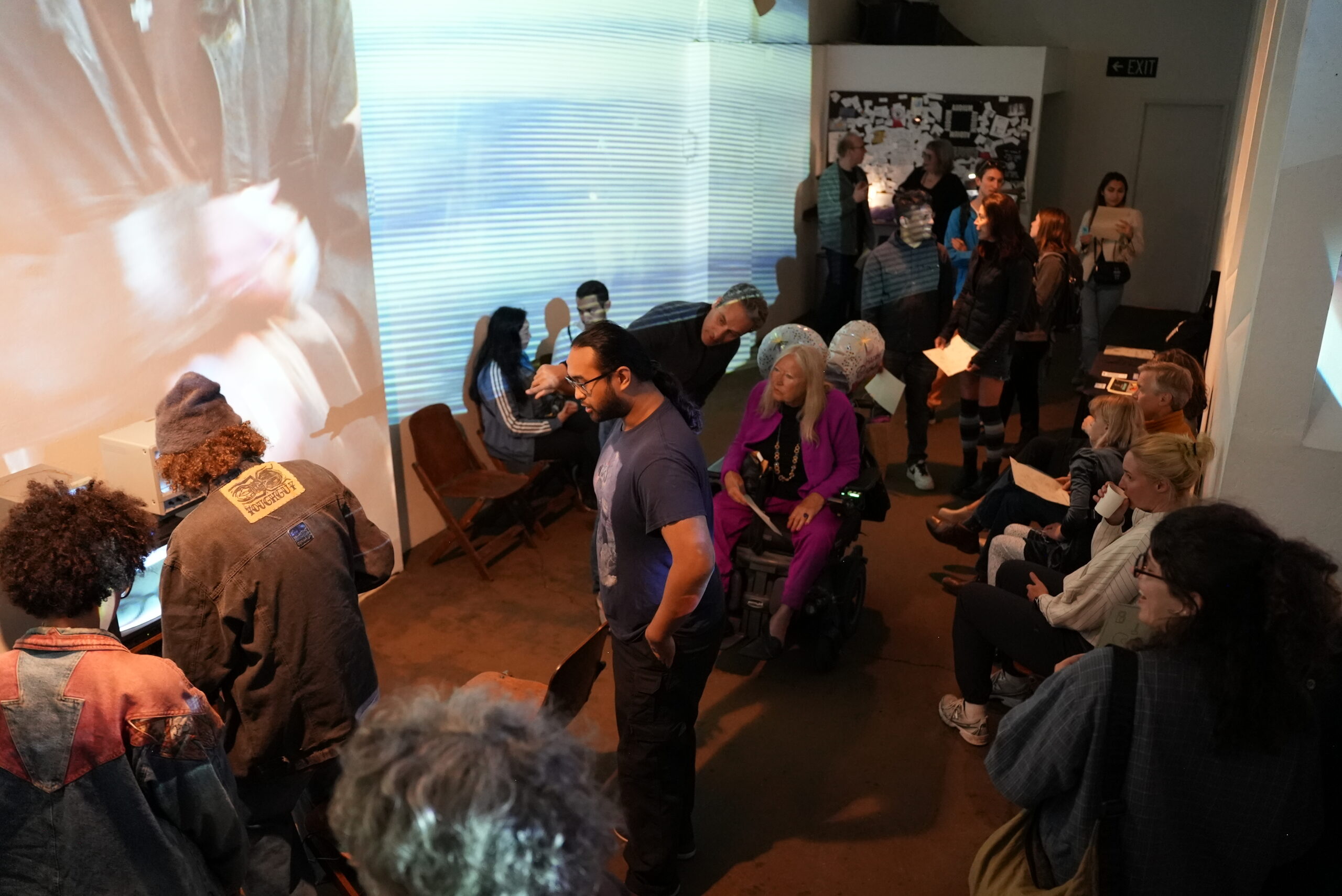
Mixing field recordings with live audio inputs from her heartbeat, breath, and digestive organs, BIOMETRICKS, a new work by artist-in-residence Barbara Nerness, is a sonic landscape that provokes wonder at our own internal biological symphonies and our relational humanity, while also raising questions about how our bodies are surveilled and by whom.
“Whenever we’re gathered in a room, especially if we are listening to music together, our heartbeats are more likely to synchronize,” Nerness says. “There’s this idea of communal entrainment or becoming more in tune with each other. But many of these signals from our body are also used as unique identifiers. Our phones have infrared sensors for tracking eye gaze; there’s remote technologies that can sense heartbeats that are being used by the military. I think there’s a lot of magic inside of us. And that is something I want people to think about, to understand what’s taken away from us.”
During the live performance, Nerness utilizes a “stethoscope microphone” — her invention — to amplify sounds from her own body, while layering these outputs with guitar, voice, drum beats (contributed by Jack Perry), and field recordings of San Francisco, highlighting how our biology is reflected in the larger systems of the city. She explains, “We have this world inside of our bodies, and our built environment mirrors that. Our veins are moving blood and we have BART trains moving people.”
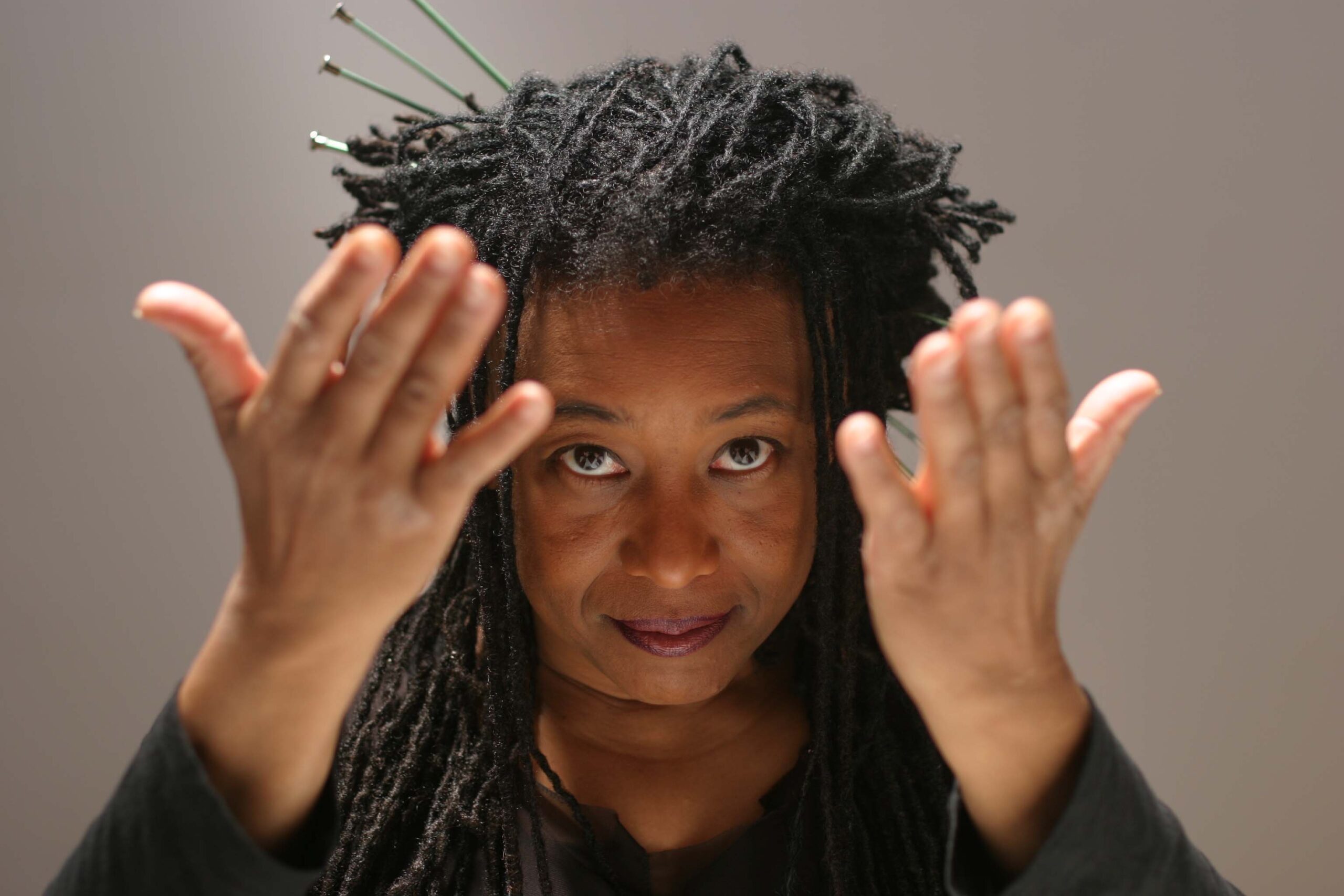
Pamela Z is a composer/performer and media artist making works for voice, electronics, samples, gesture activated MIDI controllers, and video. She has toured throughout the US, Europe, and Japan. Her work has been presented at venues and exhibitions including Bang on a Can (NY), the Japan Interlink Festival, Other Minds (SF), MoMA (NY), the Venice Biennale, and Dakar Biennale. She has composed scores for dance, film, and chamber ensembles (including Kronos Quartet and Eighth Blackbird). Her awards include the Rome Prize, Berlin Prize, Foundation for Contemporary Arts, MIT McDermott Award, the Guggenheim, and the American Academy of Arts and Letters.

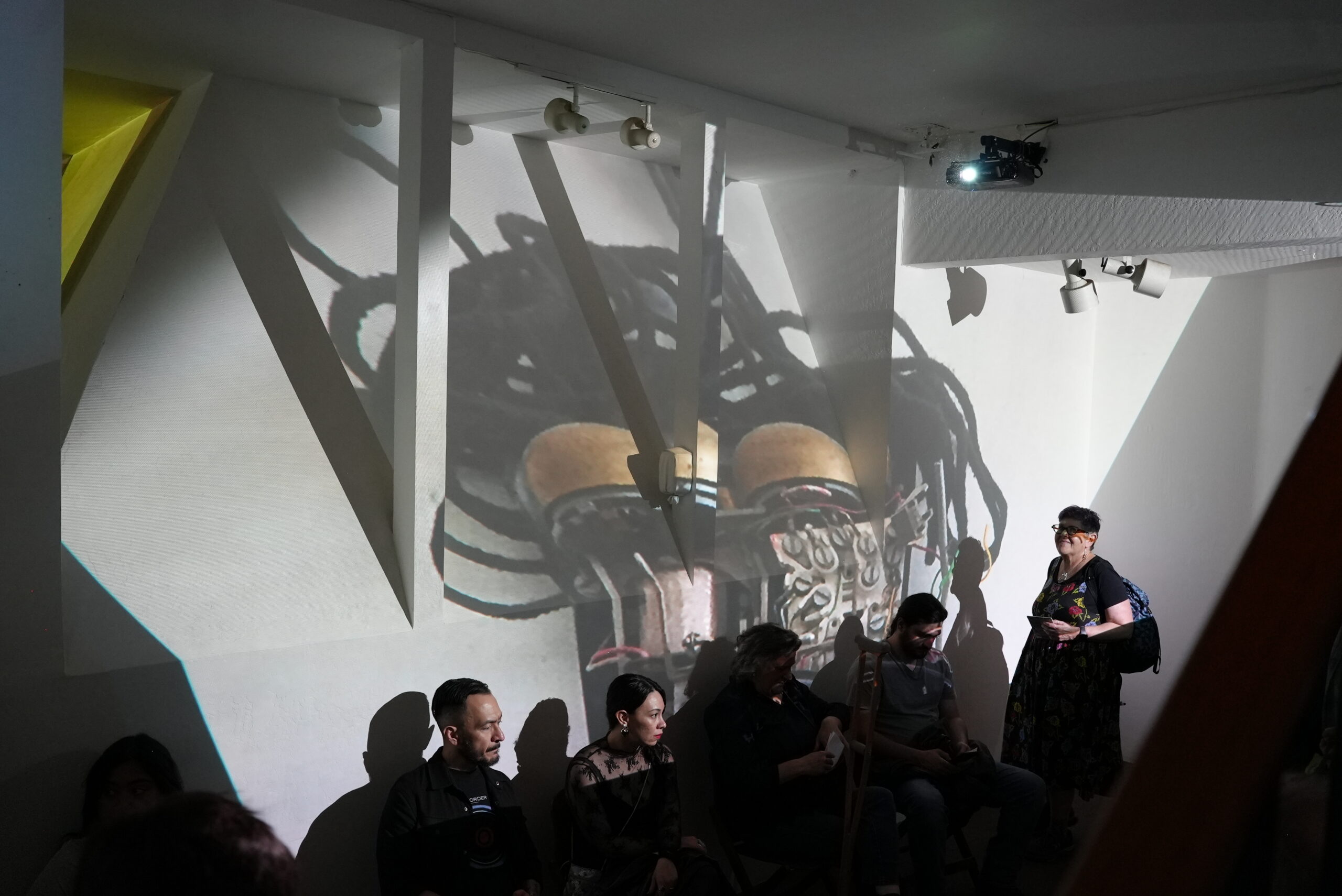
Pamela Z’s installation Arbeitsklang features speech fragments and environmental recordings captured by Pamela Z during her recent Berlin Prize residency. Listeners will be immersed in a tapestry of sound from Berlin workspaces- from the rhythmic strike of knives on cutting boards and the mechanical whir of sewing machines, to the industrial thrum of factory floors and Gutenberg printing presses. As part of her recording process, Ms. Z spoke with working people in a wide range of fields- the arts, food, factory work, and more. By layering these field recordings and interview fragments with her own processed vocals and instrumentation, Pamela Z creates a “music of voices and noises” that takes on new shape and character as it traverses Audium’s 176-speaker array.
Pat Mesiti-Miller is an Artist and Audio Producer based in Oakland, CA. Known for his inventive storytelling and immersive sound design, Pat blends fantasy and documentary elements to explore deeper truths. His work pushes boundaries of form and genre, using storytelling as a tool for resistance, empathy, and collective empowerment. In addition to his own musical projects, his audio work spans collaborations with Proximity Media, Ear Hustle, People’s Programs, and KQED’s Snap Studios.
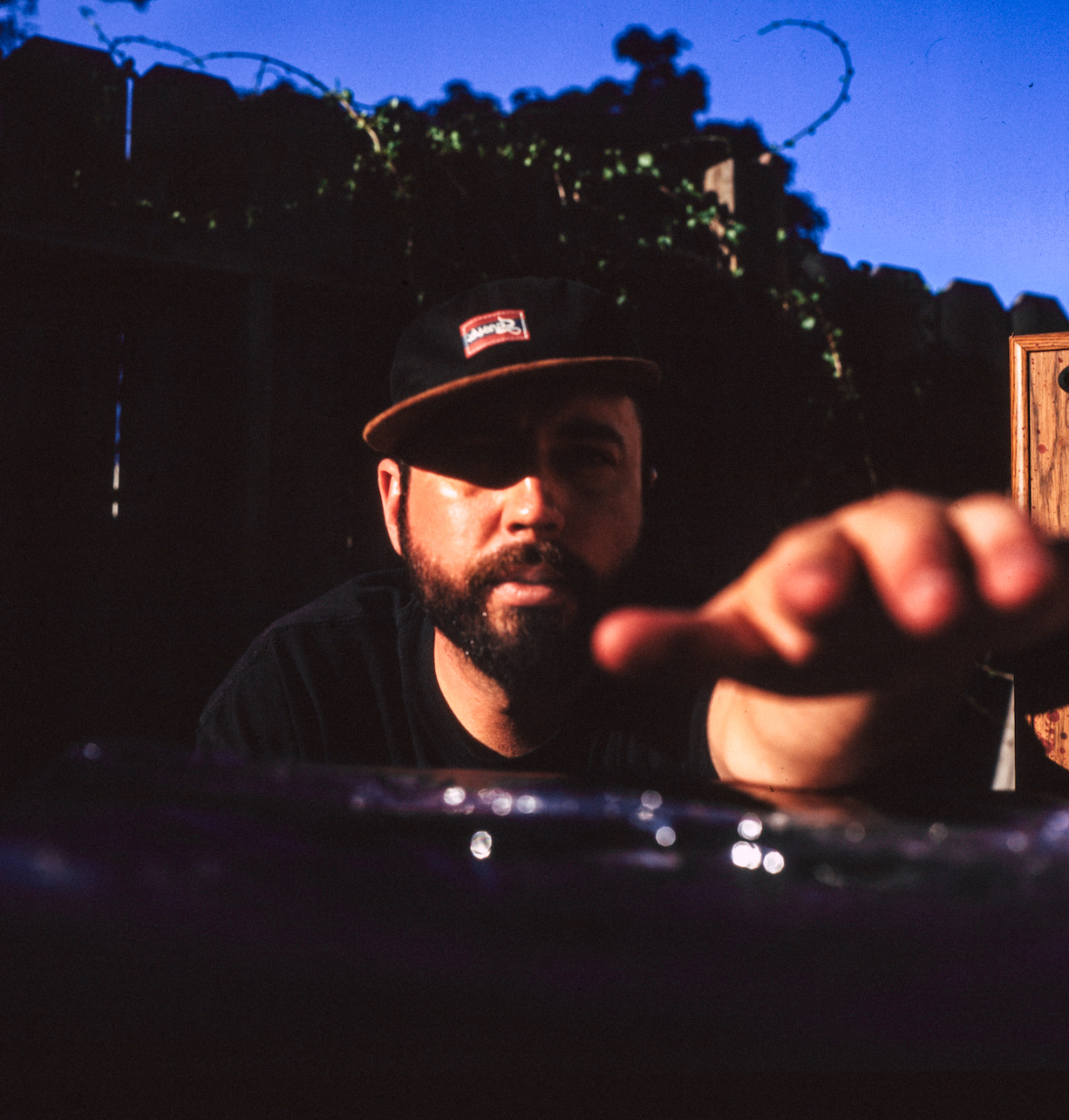
Pat Mesiti-Miller is an Artist and Audio Producer based in Oakland, CA. Known for his inventive storytelling and immersive sound design, Pat blends fantasy and documentary elements to explore deeper truths. His work pushes boundaries of form and genre, using storytelling as a tool for resistance, empathy, and collective empowerment. In addition to his own musical projects, his audio work spans collaborations with Proximity Media, Ear Hustle, People’s Programs, and KQED’s Snap Studios.
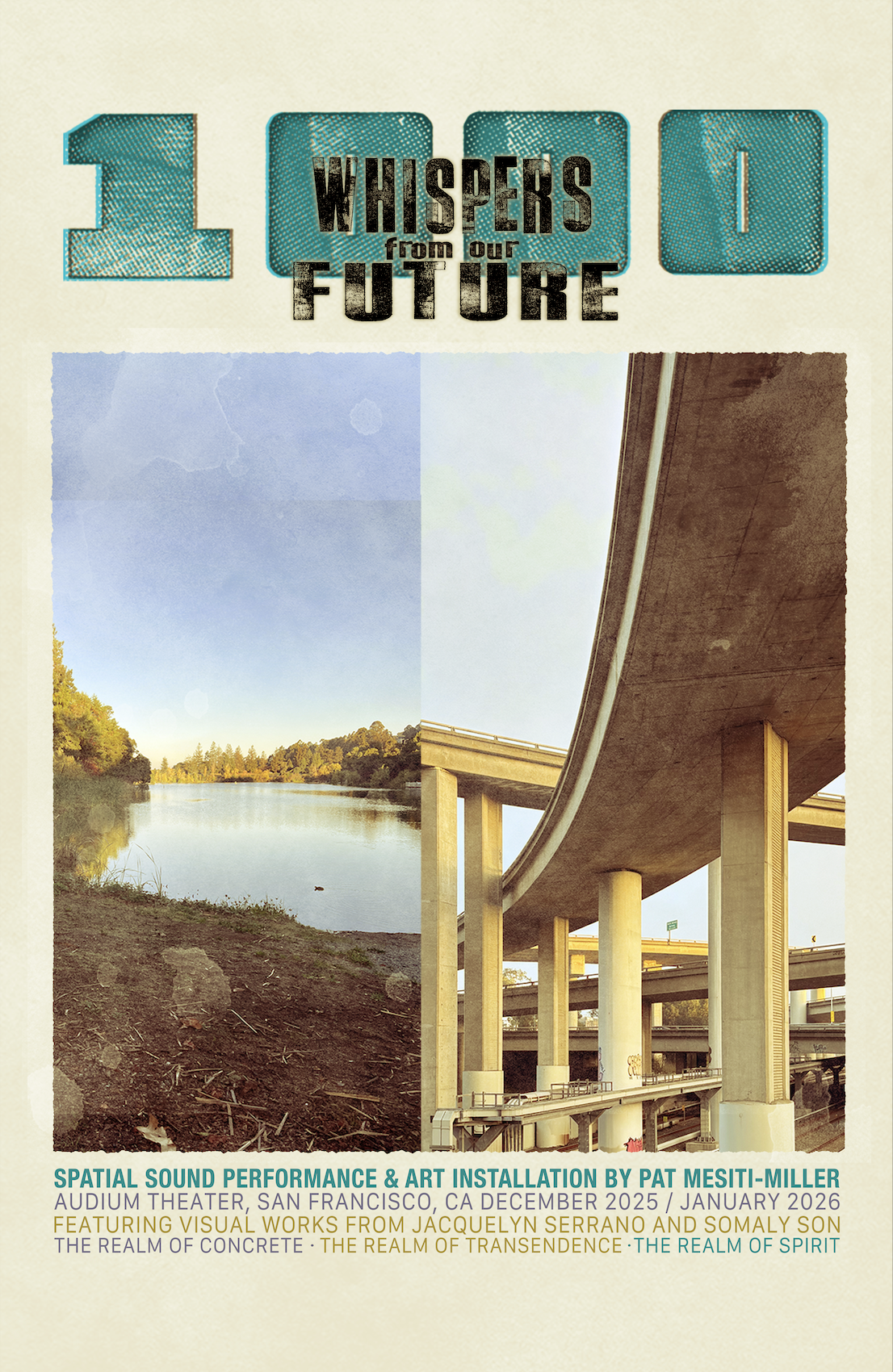
Drawing from Mesiti-Miller’s near decade of work inside California prisons, 1000 Whispers from our Future features the sounds of
carceral structures, the people living within them, and the power of collective imagination and spirit. Central to the piece is a collection of
whispered responses recorded during community visioning events, where participants were asked: “What do you want in the new world?”
The whispers become guides as they float over gritty textures, materialize, and expand before returning to the echoic ether.
Woven together through experimental sound and song, this composition guides the listener through three realms: The Realm of the
Concrete, The Realm of Transcendence, and The Realm of Spirit.